Top 5 Cultural Practices in Education

About the Author
Shelby Lynn Melting Tallow, Poksipiita’ki (Little Eagle Woman) in Blackfoot is a third-year Public Relations major at Mount Royal University. She has contributed to Indigenous engagement initiatives at Forum Community Relations Ltd. and ENMAX Energy, developed strategic media for the Honoring Traditions and Reconciliation Society, and facilitated community engagement sessions with Dialogue Partners. Shelby’s work has been published in The Western Communication Report (2025 edition), recognizing her emerging voice in ethical and culturally grounded communications.
Her path into the field began with the Indigenous University Bridging Program at MRU in 2020 and was strengthened by mentorship from Michelle Fournie, MEd, BCMM., through her involvement at Forward Summit West 2024. Shelby also completed the StepUp to Success program with MCG Careers in 2016, which sparked her passion for professional development. Coming from a family rooted in both Indigenous arts and academia, she is committed to using communications as a tool for cultural connection, advocacy, and storytelling.
The importance of Canada’s continued journey towards reconciliation has resulted in the implementation of cultural practices and initiatives at post-secondary institutions, within the framework of their operations. Initiatives such as policy amendments, inclusive cultural spaces, land-based knowledge training, embracing traditional Indigenous ceremonies and language revitalization. The outcome leads to an embodiment of Indigenous sovereignty, inclusion and well-being, which fosters longer lasting and more meaningful relationships. This blog explores some of the most impactful and widely adopted cultural initiatives within institutions across Canada, highlighting their principles, applications, and outcomes.
The Truth and Reconciliation Commission’s Calls to Action emphasize education as a critical pathway to healing and post-secondary institutions are increasingly recognizing the importance of creating culturally safe and supportive environments for Indigenous students and staff. These efforts are not just about improving academic outcomes; they are about honouring Indigenous identities, enveloping a sense of belonging, and advancing reconciliation in meaningful ways.
Supporting Indigenous students in Calgary is a collective effort, one that involves educators, families, institutions, and communities. As we progress through our journey toward reconciliation, the success of Indigenous students stands as both a measure of progress and hope. Indigenous voices, stories, and achievements are shaping the future of education and industry. When Indigenous students thrive, then the spirit of Truth and Reconciliation ignites, and everyone benefits from such a union.
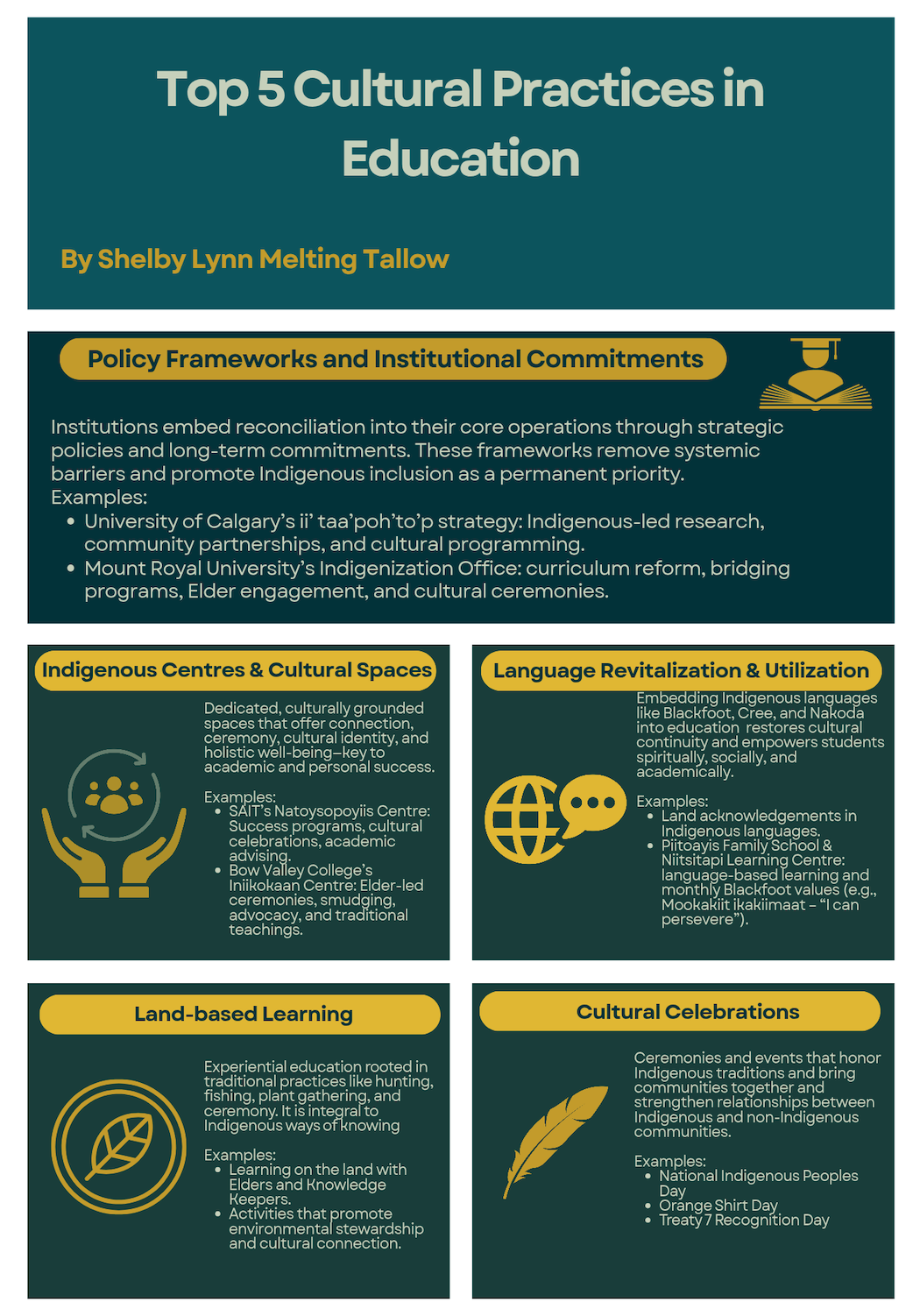
1. Policy Frameworks and Institutional Commitments
Policy frameworks are crucial to removing harmful and systemic culture and curriculum while creating lasting change. Commitments by the institutions of higher education, will ensure that Indigenous inclusion is not optional or temporary—it becomes part of the institution’s DNA, driving change and reconciliation.
Post-secondary institutions in Calgary have demonstrated strong commitments to cultural initiatives that support Indigenous student success. The University of Calgary’s Indigenous Strategy, “ii’ taa’poh’to’p” launched in 2017, exemplifies this commitment through culturally grounded programming, Indigenous-led research, community partnerships, and transparent progress reporting. This strategic route will ensure that students will receive support that cherishes their cultural identities in post-secondary education and promote their academic aspirations.
Mount Royal University’s Office of Indigenization and Decolonization advances cultural initiatives through programs like the Indigenous University Bridging Program (IUBP), which combines academic upgrading with cultural support. MRU’s broader efforts include curriculum reform, annual cultural events, Indigenous Honouring Ceremonies for graduates, engagement with Elders through the Traditional Thinkers Advisory Council, and financial support through bursaries and funds. These initiatives create an ethical space where Indigenous and Western worldviews are equally respected and integrated.
2. Indigenous Student Centres and Cultural Spaces
One of the most impactful supports is the creation of Indigenous student centres—safe, inclusive spaces where students can connect with culture, community, and resources. These centres often serve as hubs for cultural programming, academic advising, and personal support.
At SAIT’s Office of Indigenous Engagement and the Natoysopoyiis (Nîsôhkamâtotân Centre) offers welcoming, culturally affirming spaces and programs such as the Indigenous Student Success Program and Indigenous Graduation Celebration. These initiatives offer academic advising, cultural support, and community connection, reflecting SAIT’s dedication to reconciliation and educational prosperity.
At Bow Valley College’s Iniikokaan Centre, meaning “Buffalo Lodge for All Nations,” provides a culturally grounded environment for Indigenous learners. It offers advocacy for funding, Elder-led ceremonies, and cultural programming designed to reconnect students with traditional teachings. Services include smudging ceremonies, sharing circles, and guidance from Knowledge Keepers, ensuring students feel supported academically and spiritually. This holistic approach fosters resilience and belonging, which are essential for student success. The importance that cultural spaces hold is stronger sense of inclusion and community for students while providing a clear path to success.
3. Language Revitalization and Utilization
One of the most fundamental cultural initiatives is the integration of Indigenous languages such as Blackfoot, Cree, and Nakoda. The commonly utilized land acknowledgement holds respect for the connection to the history of the land and its people. This practice may appear minimal, but it nurtures cultural continuity and symbolically represents a strong sense of community, identity, and pride. By embedding Indigenous languages, traditions, worldviews into educational content for Indigenous focused schools and post-secondary institutions, these environments encourage Indigenous students to thrive academically, socially, and spiritually.
In Calgary, two Indigenous-focused schools—Piitoayis Family School and Niitsitapi Learning Centre- accommodate students from kindergarten through grade 6. These schools play a vital role in restoring identity, purpose, and foundational values that were systematically disrupted during the era of Residential Schools. At Piitoayis Family School they embrace and express monthly Blackfoot values, such as: “Mookakiit ikakiimaat” (I can persevere and try hard).
4. Land-based Learning
A vital component to embrace cultural initiatives would be land-based learning which engages students in experiential education on the land, connecting them with traditional practices like hunting, fishing, plant gathering, and ceremonial activities. This type of learning can develop a student's deeper understanding of Indigenous worldviews and create a stronger development of oneself with a holistic approach, that is spiritual, indigenous emotional, intellectual, and physical. The cultivation of environmental stewardship promotes a deep respect for natural ecosystems which are integral to ways of knowing.
5. Cultural Celebrations
Cultural celebrations and ceremonies are woven into the fabric of school and campus life, marking important occasions such as National Indigenous Peoples Day, Orange Shirt Day, and Treaty 7 Recognition Day. These events provide vibrant opportunities for Indigenous and non-Indigenous communities to come together in reflection, remembrance, and celebration. Through drumming, dancing, storytelling, and communal feasting, these gatherings honor Indigenous traditions and foster intercultural understanding and solidarity.
The five supports outlined above: policy frameworks, inclusive cultural spaces, language revitalization, holistic learning, and traditional ceremonies, represent more than just institutional initiatives. They are commitments to reconciliation, relationship building, and empowerment. When organizations and institutions implement these strategies, they create environments where Indigenous students and staff can thrive personally, academically and professionally. As Canada continues its journey toward reconciliation, these examples serve as models for meaningful action. Institutions that embrace these supports are not only improving outcomes for Indigenous learners—they are building stronger, more inclusive communities for everyone.